Friday, February 18, 2022

Wanted: better error messages

In [1] a user tries the following constraint:
mdl.addConstrs((t[i,k] * X[i,j,k] - te1[i] <= 5) >> (z1[i,k] == 1) for i,j,k in arcos if i != 0 and i != 23)
(t and X and variables). This is not accepted, and the following error message is issued:

AttributeError: 'gurobipy.QuadExpr' object has no attribute 'getVar'

This is a terrible error message. It does not describe the real, underlying problem, and it does not tell the user what to do next. Developers typically do not pay much attention to error messages. Often they seem more aimed to make life easy for the developer than providing assistance to an already confused user. In this case, I believe the modeling tool did not even issue an error message, but rather made assumptions without checking, and left it to the Python run-time system to complain. 

This constraint has two problems: 
  • Indicator constraints have a simple binary variable as condition, not a general (boolean) expression
  • Only linear constraints are supported in indicator constraints

Maybe a better message is:

Indicator constraints have the form:

        binary variable == 0 ==> linear constraint

or

        binary variable == 1 ==> linear constraint 

Your constraint does not have this form. You need to reformulate it to fit this format, or use a different (big-M) formulation.


Well-formed and meaningful error messages are very important. The user is already confused, otherwise (s)he would formulate a correct constraint. Adding confusing error messages to this confusion is not a good idea. A good error message could have prevented this post. We can think of error messages as the UI (User Interface) when it really matters: when the user needs help. Developers should pay much more attention to this.

A question for another day is of course: why are only linear constraints supported?


References


  1. AttributeError: 'gurobipy.QuadExpr' object has no attribute 'getVar', https://stackoverflow.com/questions/71153625/attributeerror-gurobipy-quadexpr-object-has-no-attribute-getvar/71158372


Wednesday, February 16, 2022

SLSQP original paper

This is somewhat hard to find (although I did), so I share it. This is the original paper[1] describing the SLSQP solver used in scipy[2]:

Tuesday, February 15, 2022

Visualization: Animating flow along an edge

In a large network, it is a bit of a pain to visualize the flow. Here is an attempt to show the shortest path in a random sparse directed graph. The shortest path is of course a min-cost flow of one unit. I used cytoscape.js [1] to generate the picture.


Thursday, February 10, 2022

4-color maps: another model

In [1], I discussed coloring all US counties (3,221 of them) such that neighboring counties have a different color. The famous 4-color theorem says we can do this with just 4 colors. After some adventures with the data, I was indeed able to produce maps with 4 colors.


Model 1: US Counties colored with minimum number of colors

An interesting part is the color count table. That table shows the number of counties colored by each color. This is a bit unbalanced. So an obvious question is:

Can we find a 4-coloring that has a more equal use of colors?

Monday, January 31, 2022

Is a heuristic a solver?

Can we call a heuristic (especially a meta-heuristic) a solver? I am not so sure.

Warning: this is somewhat of an opinionated rant. Many of you may not agree.

The name "solver" seems to imply that the underlying algorithm knows when an optimization problem is solved. By that I mean: it can stop at some stage and report "solved". Meta-heuristics typically don't have a clue about optimality, and just keep on churning until hitting some form of time or iteration limit. (One could devise some stopping criteria basic on stochastic reasoning, but that is not often used in meta-heuristics).

So my proposal is:

Heuristics (including meta-heuristics) should not be called solvers. They don't know when a problem is solved.

Tuesday, January 25, 2022

A different coloring problem

In [1] the following problem is proposed:

  • Consider a complete (undirected) graph,
  • where each arc has a weight.
  • Given a collection of colors, color each node,
  • such that the sum of the weights of arcs with same-colored nodes is minimized.
  • We can assume some sparsity in the weights. 

The user expects the number of nodes to be between 20 and 50, and there are just a small number of colors.


Minimize weights for the colored arcs


The picture shows a complete graph (all nodes have a direct arc to each other) with 10 nodes. The optimal coloring of nodes minimizes the sum of weights along the colored edges. An edge is colored if the two incident nodes have the same color. 

Sunday, January 23, 2022

Coloring the US county map

A famous result in graph theory is that we can color a planar graph with just four colors [1]. The MIP model for coloring a graph is really simple. Let's try this with a relatively large data set: the map of US counties. We'll see that there are some hurdles on the way.


Building block: MIP model for coloring a graph


The problem is as follows: we want to assign a color to each node such that nodes connected by an arc don't have the same color. The objective is to minimize the number of different colors. For the MIP model we use an assignment variable:  \[\color{darkred}x_{n,c} = \begin{cases}1 & \text{if node $n$ gets color $c$} \\  0 & \text{otherwise}\end{cases}\] To keep track of the colors we have: \[\color{darkred}u_c = \begin{cases}1 & \text{color $c$ is used for some nodes} \\ 0 & \text{otherwise}\end{cases}\]


The MIP model can look like:

MIP Model
\[\begin{align} \min & \sum_c \color{darkred}u_c \\ & \sum_c \color{darkred}x_{n,c}=1 &&\forall n \\ & \color{darkred}x_{i,c}+\color{darkred}x_{j,c} \le \color{darkred}u_c && \forall \color{darkblue}{\mathit{arc}}_{i,j}, c \\ & \color{darkred}u_c \le \color{darkred}u_{c-1} && \forall c\gt 1 \\ & \color{darkred}x_{n,c} \in \{0,1\} \\ & \color{darkred}u_c \in \{0,1\} \end{align} \]


Wednesday, January 19, 2022

An All-Paths Network Problem

In [1] a graph problem is proposed:

  • Given an undirected network,
  • Find all paths between two nodes,
  • Such that no arc is used more than once,
  • And the path does not contain more than \(M\) arcs
Notice that nodes can be visited several times. I thought this could be a good job for a solution pool approach. 

Preliminaries


As I am more familiar with directed graphs, let's start with setting up a small random, sparse, directed graph. 

I start with 10 nodes and say there is a 20% probability that a link exists between two nodes, \(i \rightarrow j\). So the data set looks like:


----     30 SET n  nodes

 n1 ,    n2 ,    n3 ,    n4 ,    n5 ,    n6 ,    n7 ,    n8 ,    n9 ,    n10 

----     30 SET a  directed arcs

            n1          n2          n3          n4          n5          n6

n1                     YES                     YES
n2                                                                     YES
n3                                 YES
n4                                 YES         YES                     YES
n6                                                         YES
n7         YES                                             YES
n8                                 YES
n9         YES

 +          n7          n8          n9         n10

n1                     YES
n2                     YES
n3                     YES         YES
n4         YES
n5                                 YES
n6                                             YES
n8                                             YES
n9         YES                                 YES


Using \(n_1\) as the start node and \(n_{10}\) as the end node, we can visualize this as:


Tuesday, December 28, 2021

Importing JSON files into GAMS

JSON (JavaScript Object Notation) files [1] provide a flexible and simple way to store and exchange data. It is text, so we can easily look at it. JSON files typically have the extension .json. (using it may help syntax coloring in editors). JSON can represent rather complex tree-like data structures that may require some work to convert into simpler formats such as tabular data. 

EIA (U.S. Energy Information Administration) provides bulk data in JSON format [2]. These files are not strictly JSON. They have a .txt extension. Basically, each line is a JSON object. 


To make it a proper JSON file one would have to wrap this into an array.

Sunday, December 26, 2021

MacMahon Squares

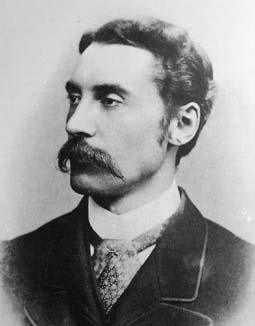
Percy Alexander MacMahon [1]


This post is about a puzzle designed by Percy Alexander MacMahon [1] and described in a book published in 1921 [2].